 FiligranaPT.pt
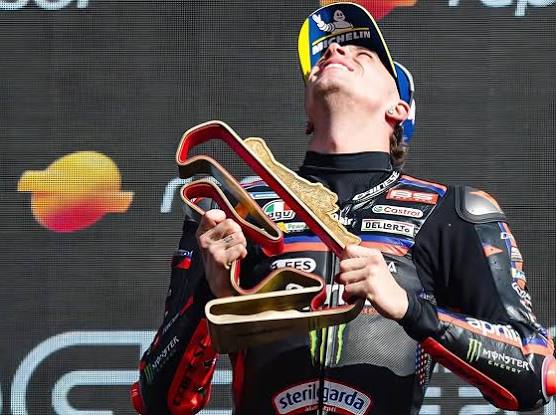
When Speed Meets Art: Portuguese Filigree on the 2026 MotoGP Podium
From November 20 to 22, 2026, Portugal hosted one of the most spectacular rounds of the MotoGP World Championship. For connoisseurs of fine jewelry, however, the event was memorable not only for the intense competition on the track but also for the unique awards presented to the winners.
What is MotoGP, and why is it the "Formula 1" of the two-wheeled world?
If you are unfamiliar with the world of motorsport, a few figures will help illustrate the scale of this event. MotoGP is the premier, "royal" class of road racing, held under the auspices of the International Motorcycling Federation (FIM) since 1949.
Unlike standard racing, riders here compete on one-of-a-kind prototype motorcycles. Built exclusively for racing, each machine costs millions of dollars and is strictly prohibited from being ridden on public roads.
Hidden beneath the fairings lies immense power: a 1000cc engine produces approximately 300 horsepower, all while the bike weighs less than 160 kg.
On the straights, riders reach speeds exceeding 360 km/h, while in corners, they lean their bikes at angles of up to 65 degrees—literally skimming the asphalt with their knees, elbows, and even shoulders.
Notably, the 2026 season marked a historic milestone: it was the final year for 1000cc engines.
Starting in 2027, the championship will transition to 850cc engines. ...to make racing even safer and overtaking more spectacular.
A "Roller Coaster" in Portimão and an Early Championship Win
The Portuguese round took place at the Autódromo Internacional do Algarve, near the city of Portimão. Among the riders, the track has earned the nickname "the roller coaster" due to its dramatic elevation changes and high-speed blind corners.
The race was intense: Italian rider Marco Bezzecchi took the victory, followed by Spaniard Jorge Martín in second, with his compatriot Raúl Fernández rounding out the top three.
The season’s biggest question was answered at the eighth position in the final standings: that is where Spaniard Marc Márquez finished, but the points he earned were enough to secure the 2026 MotoGP World Championship title with races still to spare.
Exquisite Filigree in the Hands of Champions
What could roaring, 150-kilogram racing prototypes possibly have in common with the delicate craft of jewelry-making? The organizers of the Portuguese Grand Prix provided an answer through the event’s official trophies, which blend modern design with the centuries-old Portuguese tradition of filigree.
The concept for the awards was developed by designer Carlos Mello. The shape of the trophy clearly reflects the layout of the Portimão circuit, with its dizzying descents and climbs, while the smooth, undulating base evokes the waves of the Atlantic Ocean that wash against the country’s shores.
The most exquisite detail of the award is the outline of the Portuguese coastline, woven from the finest precious threads. This is authentic Portuguese filigree, handcrafted by Arlindo Moura, a master artisan from Gondomar.
Each trophy is a true work of art. The body, made of gold-plated silver, is adorned with intricate openwork filigree and inserts of vibrant red leather.
The pedestal consists of a substantial brass base, cast at the very same Portuguese workshop—Northbrass—that produces the trophies for the Cannes Film Festival.
In total, 12 unique awards were handcrafted. They were presented to the top finishers in the main race and the sprint of the premier MotoGP class, as well as to the best riders in the Moto2 and Moto3 categories.
In this way, a piece of the painstaking craftsmanship of Portuguese jewelers has become a permanent part of the history of elite motorcycle racing.
Back to list