 FiligranaPT.pt
The oldest form of consumer protection
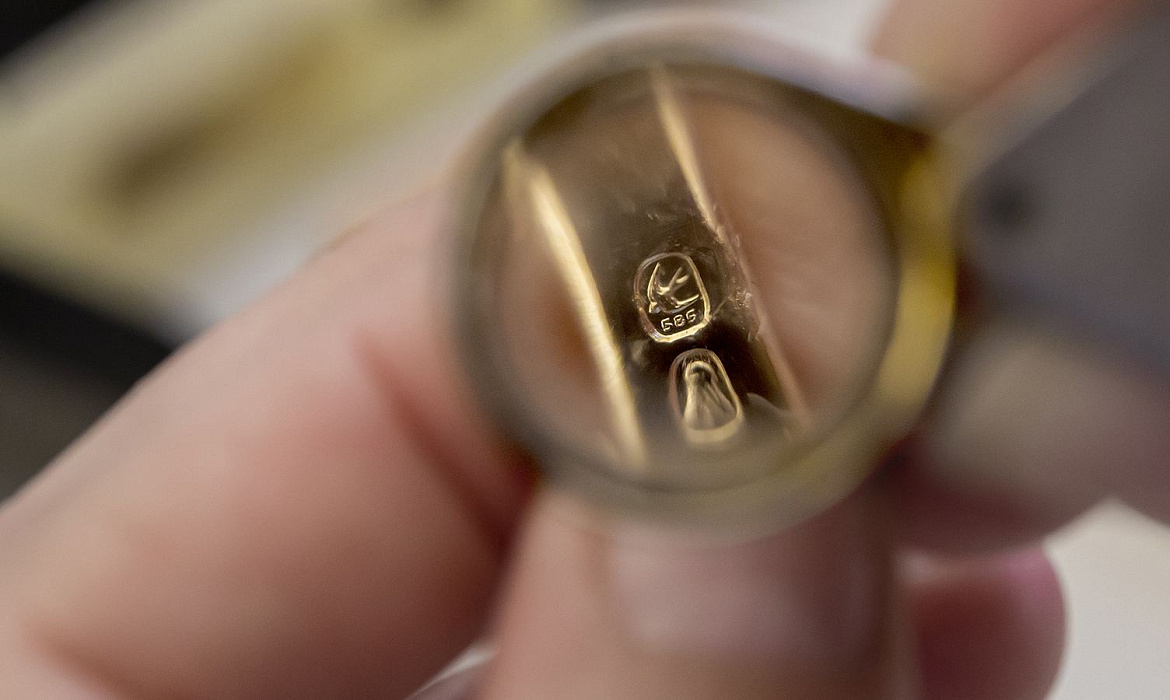
To confirm the quality of the alloys used, there is a control system, which consists of applying a stamp (punch) to the products by the Portuguese Assay Office Contrastaria. Contrastaria is authorized at the national level to verify and guarantee the metal content of alloys.
Control and marking of products made of precious metals is the oldest form of consumer protection. Counterfeiting jewelry in the past was a crime strictly punishable by law, similar to counterfeiting currency. Punishment varied over the years from exile to death. Currently, the Portuguese Penal Code provides for severe penalties for counterfeiting Assay Office punches.
In the Middle Ages, control over the hallmark of precious metals was entrusted to the guilds of jewelers. By this time, King John I (1357-1433) had already regulated the profession of a jeweler and the trade in jewelry.
In Lisbon there was the Confederation of Goldsmiths (Confraria dos Ourives de Lisboa), the Confederation of Goldsmiths (Confraria dos Prateiros de Lisboa) and their counterparts in Porto, which were subject to very strict rules designed to guarantee the quality of the products produced. Control over these activities was carried out by the Casa da Moeda organization, which acted "on behalf of the king."
With the disappearance of the trade guilds in 1834, the task and responsibility for marking precious metal products was transferred to municipalities, a system that proved ineffective. As a result, Portuguese brands and jewelry lost some of their authority.
In 1881, King Luis I issued a decree on the uniformity of gold and silver products throughout the country. A year later, the Prime Minister of Portugal, Fontes Pereira de Melo, in an effort to strengthen the previous controls and inspections, abolished the municipal assay offices and decided to create assay offices in Lisbon and Porto, subordinate to the Contrastaria Portuguese Assay Office.
In 1886, an assay office was created in the city of Braga, but in 1911 it was abolished. In 1900, the government was asked to create a new assay office in Gondomar, given the number of manufacturers located there. The Assay Office in Gondomar was established in 1913.
With the creation in 1972 of the National Assay Office (Imprensa Nacional-Casa da Moeda), the Assay Offices were incorporated into this state-owned company. In 1986, the current Assay Department of the Imprensa Nacional-Casa da Moeda was created, combining the Assay Offices in Lisbon and Porto, including a branch in Gondomar, which still exists today.
In accordance with the legal framework for jewelers and assay offices, approved by Law No. 98/2015 of August 18, 2015, products made of precious metals such as gold and silver must be assayed in order to guarantee the consumer the quality and authenticity of the metals/alloys used , which, of course, is a prerequisite for assigning the “Filigree from Portugal” certificate to products.
In addition, the piece must bear a punch with a certification mark, applied by the jeweler himself (in a location chosen by him and in a size that each workshop considers optimal for each piece to which it will be applied), which identifies the piece as Filigrana de Portugal, a certified traditional craft equipment.
Control and marking of products made of precious metals is the oldest form of consumer protection. Counterfeiting jewelry in the past was a crime strictly punishable by law, similar to counterfeiting currency. Punishment varied over the years from exile to death. Currently, the Portuguese Penal Code provides for severe penalties for counterfeiting Assay Office punches.
In the Middle Ages, control over the hallmark of precious metals was entrusted to the guilds of jewelers. By this time, King John I (1357-1433) had already regulated the profession of a jeweler and the trade in jewelry.
In Lisbon there was the Confederation of Goldsmiths (Confraria dos Ourives de Lisboa), the Confederation of Goldsmiths (Confraria dos Prateiros de Lisboa) and their counterparts in Porto, which were subject to very strict rules designed to guarantee the quality of the products produced. Control over these activities was carried out by the Casa da Moeda organization, which acted "on behalf of the king."
With the disappearance of the trade guilds in 1834, the task and responsibility for marking precious metal products was transferred to municipalities, a system that proved ineffective. As a result, Portuguese brands and jewelry lost some of their authority.
In 1881, King Luis I issued a decree on the uniformity of gold and silver products throughout the country. A year later, the Prime Minister of Portugal, Fontes Pereira de Melo, in an effort to strengthen the previous controls and inspections, abolished the municipal assay offices and decided to create assay offices in Lisbon and Porto, subordinate to the Contrastaria Portuguese Assay Office.
In 1886, an assay office was created in the city of Braga, but in 1911 it was abolished. In 1900, the government was asked to create a new assay office in Gondomar, given the number of manufacturers located there. The Assay Office in Gondomar was established in 1913.
With the creation in 1972 of the National Assay Office (Imprensa Nacional-Casa da Moeda), the Assay Offices were incorporated into this state-owned company. In 1986, the current Assay Department of the Imprensa Nacional-Casa da Moeda was created, combining the Assay Offices in Lisbon and Porto, including a branch in Gondomar, which still exists today.
In accordance with the legal framework for jewelers and assay offices, approved by Law No. 98/2015 of August 18, 2015, products made of precious metals such as gold and silver must be assayed in order to guarantee the consumer the quality and authenticity of the metals/alloys used , which, of course, is a prerequisite for assigning the “Filigree from Portugal” certificate to products.
In addition, the piece must bear a punch with a certification mark, applied by the jeweler himself (in a location chosen by him and in a size that each workshop considers optimal for each piece to which it will be applied), which identifies the piece as Filigrana de Portugal, a certified traditional craft equipment.
Back to list