 FiligranaPT.pt
Vienna Convention on the Control and Marking of Precious Metals
Since 1982, Portugal has been a member of the Vienna Convention on the Control and Labeling of Precious Metals. This convention harmonizes the placement and use of the Common Indicator Mark. Such markings facilitate international trade in precious items. Thus, countries party to the convention can export products made of precious metals to other countries party to the convention without additional formalities. These marks have the same legal status as national official marks.
This agreement was signed in Vienna in November 1972 and came into force on June 27, 1975.
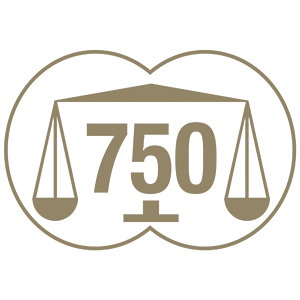
According to the adopted agreement, in order to simplify the procedure for the import/export of products made of precious metals, they must be marked with a unified control mark (Common Control Mark, or CCM) in the form of scales, between the bowls of which there is a corresponding number indicating the metal sample.
This mark is applied to the product by the country of origin. The state, which is the importer, is obliged to accept products with such a mark without further re-approval in the national assay office.
The Convention does not at all prohibit countries that have accepted the agreement from importing products made of precious metals without a single control mark. But upon import, such products must be re-tested by the receiving country.
Application of a single control mark is optional.
A single control mark is placed on the product at the request of the manufacturer.
A single control mark is placed on the product regardless of the current marking system in a country that is a member of the international convention.
This agreement was signed in Vienna in November 1972 and came into force on June 27, 1975.
According to the adopted agreement, in order to simplify the procedure for the import/export of products made of precious metals, they must be marked with a unified control mark (Common Control Mark, or CCM) in the form of scales, between the bowls of which there is a corresponding number indicating the metal sample.
This mark is applied to the product by the country of origin. The state, which is the importer, is obliged to accept products with such a mark without further re-approval in the national assay office.
The Convention does not at all prohibit countries that have accepted the agreement from importing products made of precious metals without a single control mark. But upon import, such products must be re-tested by the receiving country.
Application of a single control mark is optional.
A single control mark is placed on the product at the request of the manufacturer.
A single control mark is placed on the product regardless of the current marking system in a country that is a member of the international convention.
Back to list