 FiligranaPT.pt

When they opened the tomb, her mummy fell apart.
According to one version, the archaeologists were not careful enough, according to another version, this was her wish - to turn to dust if someone disturbed the peace of the deceased.
Only the treasures of the Egyptian queen Ahhotep have survived to this day
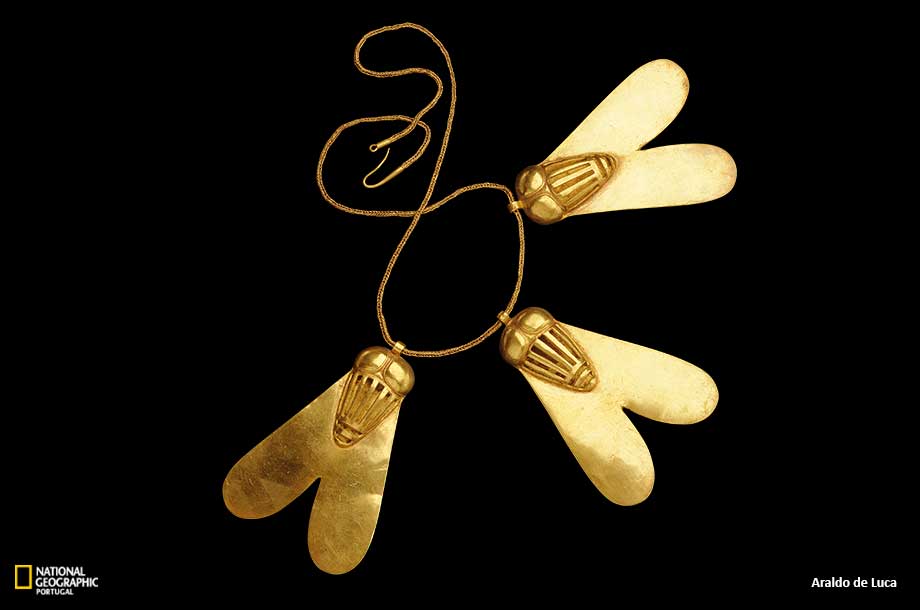
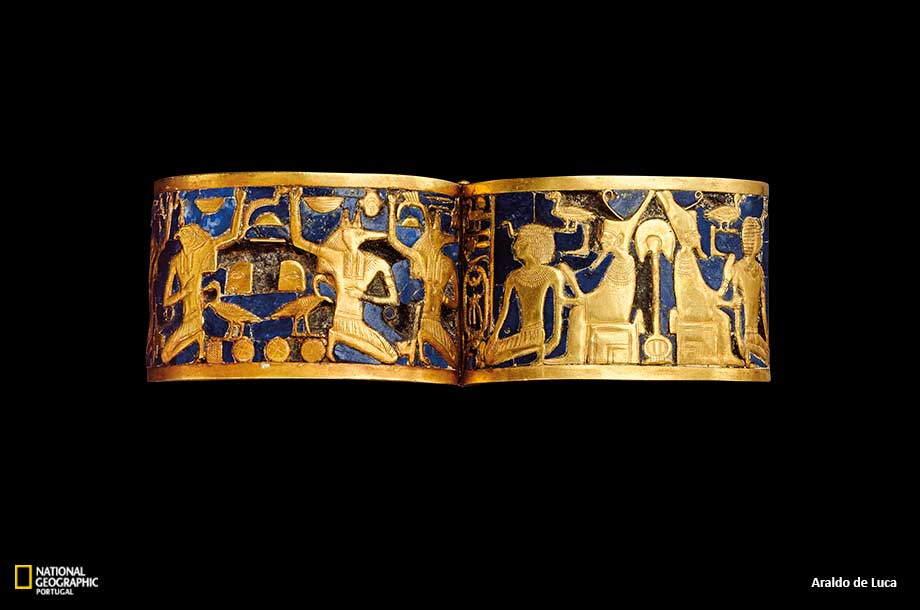
Beautiful gold and silver objects, weighing almost two kilograms in total - bracelets, gold chains, pendants, a ceremonial dagger made of pure gold and a legendary decoration, the highest military award - gold flies.
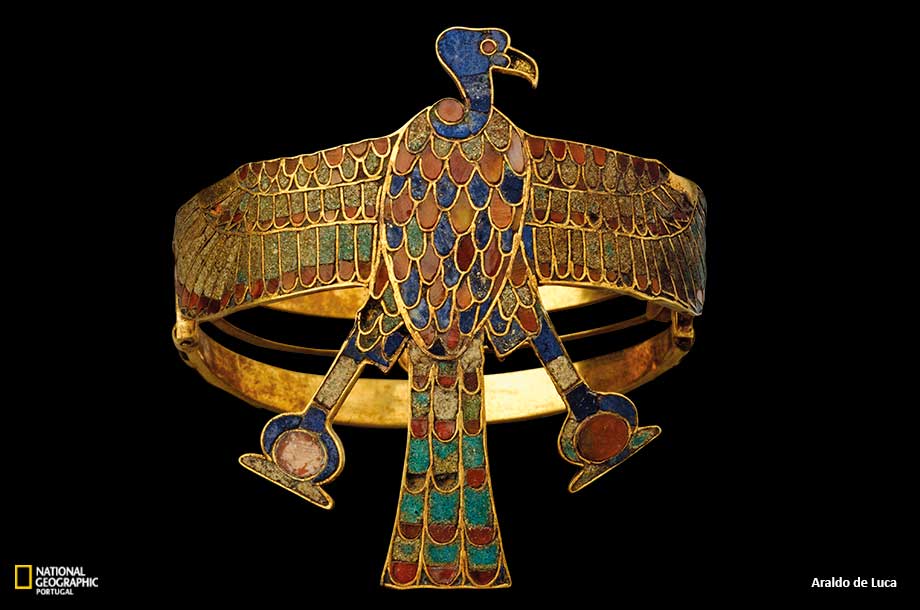
Among the bracelets, one in particular attracts attention, as it is made in the form of the vulture goddess Nekhbet, the heraldic deity of Upper Egypt, with outstretched wings. On each leg of the vulture is depicted the hieroglyphic sign chen - a symbol of protection. The bracelet is engraved on gold and has inserts of lapis lazuli, carnelian and turquoise, imitating the feathers of the bird.
The vulture in Egyptian art plays not only a decorative role: the bracelet actually reveals a very interesting symbolism, since this carrion bird was also a hieroglyphic sign used to write the word "mother". It is not surprising that a woman like Queen Ahhotep would adorn herself with a bracelet that proclaimed the virtue of motherhood, for she had achieved great power as queen mother and regent.
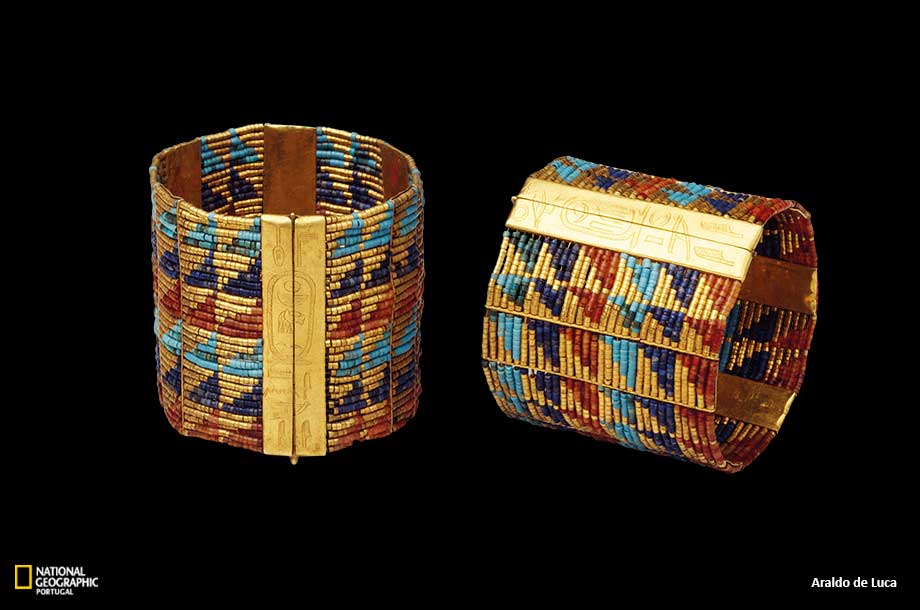
Outstanding among the rich collection of jewelry found in Ahhotep's tomb are these two bracelets with small beads of gold, lapis lazuli, carnelian, and turquoise, displaying a pleasing design in the form of small triangles.
Who was Ahhotep?
We have to go back to the middle of the 16th century BC. Ancient Egypt experienced a period of exceptional importance in its history, marked by the exceptional role of royal women in the management of state affairs.
Ahhotep was the wife of a brave warrior, King Seqenenre Tao II, who died on the battlefield. Their youngest son, Ahmose, a boy who was only 10 years old, was to ascend the throne. Therefore, the queen mother took on the role of regent of the country.
On behalf of her son, Ahhotep had to fight on several fronts and finally expel the enemies, restoring the country.
Ahhotep was a capable commander of troops and had excellent negotiating skills, for which she received the highest military decoration ever awarded in Egypt: a necklace with three golden spots.
Years later, Ahmose, as an adult and the king of a united Egypt, wanted to perpetuate the memory of his mother's exploits and leave a lasting proof of recognition for his country. He ordered a large engraved stele to be erected in the temple of Karnak, in which he included a paragraph expressing his gratitude to his mother.
"[…] she who governs the multitude and cares for Egypt with wisdom; she who worries about her army; who watches over it; who managed to force the enemies to leave and reunite the dissidents;
who pacified Upper and Lower Egypt and pacified the rebels […]».
Queen Ahhotep's jewelry has come close to disappearing many times. In one case, some of the jewelry went to the World Exhibition in Paris in 1867. They pleased the French Empress Eugénie de Montijo so much that it was proposed to give them to France as a gift from the Viceroy of Egypt. Stunned by what was happening, Auguste Mariette, who was in charge of the excavations, managed to take the jewelry out of France and arranged for its return to the Egyptian Museum in Cairo, where it is now located.
There are many intertwined stories hidden in the shadow of Queen Ahhotep's jewelry. One of them is the story of anonymous goldsmiths who lived in Egypt 3,500 years ago, using the most noble and unchanging metal, a symbol of incorruptibility and eternal life. They left us with a magnificent example of the high level of sophistication and perfection achieved in the art of jewelry on the banks of the Nile.
The jewels of Queen Ahhotep continue to inspire admiration through the ages.
Back to list